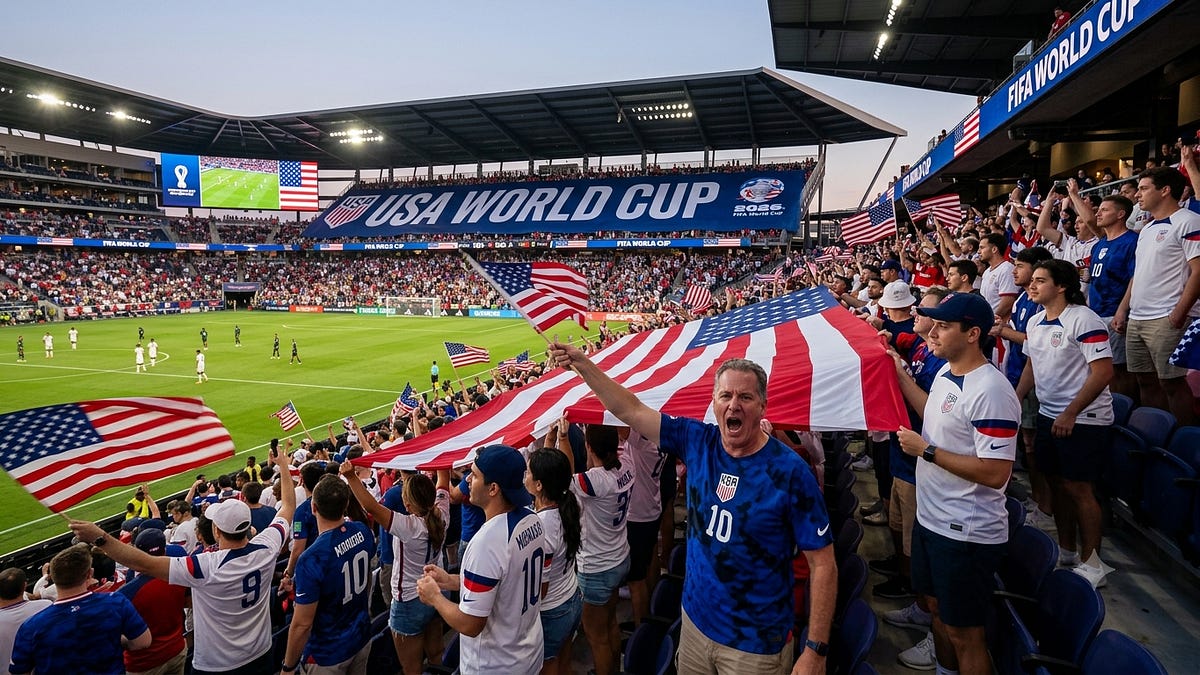
Team USA is out of the World Cup. Belgium ran them off the field 4-1 in the Round of 16, and every “USA to win the tournament” contract on Kalshi settled at zero. Anyone holding “No” — the bet that the USA would not win it all — got paid.
So here’s the tempting takeaway, the one making the rounds: of course they lost, they were never going to win, betting against them was free money. And here’s why that takeaway is dangerous, even though the bet worked: “a longshot lost, therefore fading it was easy” is exactly the logic that eventually wipes people out.
Let me explain why the USA “No” was genuinely a good bet — and why it was good for a completely different reason than most people think.
The trap in “easy money”
At their peak, the USA traded around 4-5% to win the World Cup on Kalshi — call it a nickel on the dollar. That means “No” was trading around 95¢.
Think about what betting “No” on a 5% team actually is. You’re risking 95 cents to make 5 cents. You win most of the time — 95% of the time, by the market’s own math — but each win is tiny, and the rare loss is catastrophic relative to the wins. Lay that price twenty times against twenty different 5% longshots and, on average, one of them hits and torches the small profits you banked on the other nineteen.
This is the single most common way people light money on fire in prediction markets and sportsbooks: selling longshots because they “never happen,” collecting the small wins, and feeling like geniuses right up until the one that does happen erases a season of profit. A 5% team losing is not proof the bet was smart. It’s the expected outcome. It tells you almost nothing about whether you got a good price.
The fact that USA lost doesn’t make “No” a good bet. So what does?
The real edge: they were overpriced
Here’s the part that actually matters. The USA wasn’t just a longshot — they were an overpriced longshot.
Independent models that simulate the tournament thousands of times along the real bracket pegged the USA’s true championship probability at around 1.9%. Kalshi had them as high as 4.3%. Polymarket sat around 2.2%. So the sharpest available estimates of the USA’s real chance were less than half of what Kalshi was charging.
That gap is the whole story. When a team’s true probability is ~1.9% but the market prices them at ~4.3%, the “Yes” side is badly overpriced — which means the “No” side is underpriced, and buying it is positive expected value. Not because the USA was going to lose (though they probably were), but because you were getting paid more than the risk was worth.
The distinction is everything:
-
The naive bet: “USA won’t win, so I’ll lay 95¢ to make 5¢.” That’s selling a longshot at whatever price the market offers, and over time it’s a losing strategy.
-
The sharp bet: “USA’s real chance is ~2%, but the market is pricing them at ~4.3%, so ‘No’ at ~95.7¢ is actually cheap relative to its true ~98% value. I’ll take it.” That’s buying a mispriced contract, and over time it’s a winning strategy.
Same bet on the surface. Completely different reasoning underneath. One is discipline; the other is the trap.
Why was the USA overpriced? Follow the patriotic money.
If the models said 1.9% and Kalshi said 4.3%, someone was buying USA “Yes” at prices the math didn’t justify. Who?
We flagged exactly this dynamic back when the tournament started. On the winner market, the country with the most money traded on it wasn’t Spain or France — it was the United States, with nearly $57 million in volume on Polymarket, despite carrying one of the lowest championship probabilities of any team getting real action. Americans were betting on America at a rate that had nothing to do with the USA’s actual chances and everything to do with the flag on the jersey.
That’s the engine. Patriotic money is price-insensitive money. A fan buying USA “Yes” isn’t running a bracket simulation — they’re buying a feeling, a hope, a “wouldn’t it be amazing.” That wall of sentiment-driven cash pushes the “Yes” price up above the team’s true probability, which is precisely what inflates the “No” side into a value bet for anyone willing to bet against the home crowd.
This is the recurring theme of everything we write: the edge isn’t in predicting the game. It’s in finding the spot where the price and the probability disagree — and betting the gap. The USA “No” was that gap, handed to you by 200 million people’s worth of hope.
The honest caveats
Being right this time doesn’t validate the process by itself. The USA losing is one data point, and even a bad longshot-fade wins ~95% of individual bets. The reason to trust this bet was the pre-game gap between the model number (~1.9%) and the market number (~4.3%), not the final score. If Belgium had somehow lost and the USA had gone on a Cinderella run, the bet would still have been correctly priced — you’d have just lost a well-priced bet, which happens.
The margins are thin and the tail is real. Even a correctly priced “No” on a longshot pays small and carries genuine wipeout risk. You have to size these properly — this is exactly where a Kelly calculation matters — because “high probability” is not “no probability,” and the whole danger of the longshot-fade is over-betting the small edge.
The overpricing has to be real, and you have to measure it. The USA case worked because credible models actually pegged their true number well below the market. You can’t just assume a team is overpriced because you have a hunch. Without an independent probability estimate to compare against the price, “they’re overpriced” is just a vibe — and vibes are how you end up on the wrong side of the very mispricing you thought you were exploiting.
The takeaway
Yes, betting against Team USA to win the World Cup was the easy money. But write down why, because the reason is the entire difference between a strategy and a trap.
It wasn’t easy because a 5% team was likely to lose — laying 95¢ to make 5¢ on longshots is how disciplined-looking bettors slowly go broke. It was easy because the USA was overpriced: their true championship chance was around 2%, the market was charging more than double that, and the gap was inflated by tens of millions of dollars of patriotic money that was never doing the math in the first place.
The USA got knocked out by Belgium, and “No” cashed. But you didn’t win because they lost. You won because you got a better price than the risk deserved — and that, not the final score, is the only reason any bet is ever a good one.
Find the gap between the price and the probability. Bet the gap. Let everyone else bet the flag.
USA championship odds: ~4.3% peak on Kalshi, ~2.2-2.8% Polymarket, ~1.9% via independent simulation models (Squawka Signal), which flagged Kalshi as overpriced. USA eliminated 4-1 by Belgium in the Round of 16; winner contracts settled to No. The ~$57M patriotic-money figure is Polymarket USA winner-market volume as previously reported. Odds move continuously and are cited as of the relevant dates. Laying longshots carries real tail risk regardless of individual results; size positions accordingly. Nothing here is betting advice.